Evidence Matters
Sponsored by the Dutch East India Company, Henry Hudson and the crew of the Half Moon set sail from Amsterdam on April 4th, 1609. Tasked with finding a Northeast Passage to Asia, Hudson and his crew encounter heavy arctic ice and severe weather somewhere north of Norway. Unable to continue eastward, Hudson and the crew self-elect to cross the Atlantic Ocean in hopes of finding a Northwestern Passage to Asia through the recently discovered North America continent.
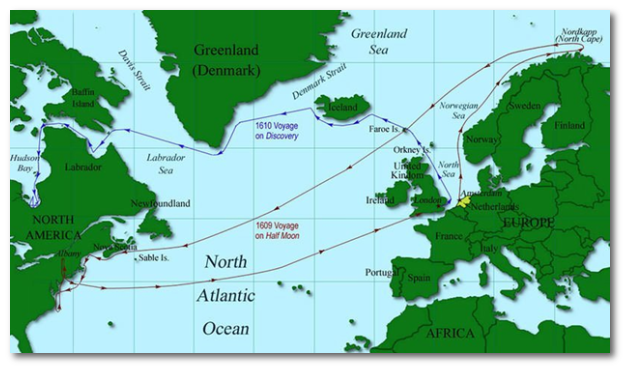
Four months after their departure, the Half Moon and her crew pass Newfoundland, Nova Scotia. By many accounts, the crew continued as far south as modern day North Carolina before returning northward. Working their way up the east coast of America, in early September Hudson enters what is today’s New York Lower Bay. Navigating further north, Hudson becomes the first European to discover the future Manhattan Island. The date:
Hoping this riverway would provide a passage to Asia, Henry Hudson and the Half Moon crew continue their journey north along the river later named after the ship’s captain. As they depart the island, the explorers have no way of imagining the future tragedy that will shake this island precisely 392 years later.

Following Hudson’s 1609 journey, the Dutch return in 1624 and launch a trading post on the southern tip of the island. Soon after, New Amsterdam is established and later recognized as the birthplace of New York City. Years later, the Twin Towers would, for a time, overlook this historic location.

September 11, 1609, and September 11, 2001, a 1 in 365 chance (0.27%) these two events occur on the same date. Relying on such historical truths, this exhibit further exposes the spiritual truth behind September 11.
One coincidence is just a coincidence, two coincidences are a clue, three coincidences are a proof. - Agatha Christie